- (702) 530-2549
- admin@mindwellpsychiatricservices.com
- Tue - Sat: 10:00 AM - 06:00 PM

TBI Treatment in Las Vegas
Restore Your Focus and Find Your Way Back

Schedule an Appointment
A traumatic brain injury changes how your brain works — and that change can ripple into your sleep, your mood, your memory, and your relationships. At MindWell Psychiatric Services, we provide focused TBI treatment in Las Vegas for adults recovering from concussions, motor vehicle accidents, falls, workplace injuries, sports collisions, assaults, and the lingering effects of repeated head impacts. We also support veterans living with blast injuries from combat. Recovery is rarely linear, but it is real, and the right psychiatric care plan often makes the difference.
Our practice is led by Michael Kuron, MSN, APRN, PMHNP-BC, a psychiatric mental health nurse practitioner with extensive experience treating brain-injury-related psychiatric symptoms. He treats every patient — civilian or veteran — with the same dignity, the same evidence-based protocols, and the same focus on the symptoms actually disrupting your life.
Signs and Symptoms of TBI
TBI symptoms rarely arrive in a tidy package. Some show up the day of the injury. Others surface weeks or months later. Many patients describe a vague sense that something is "off" long before they connect it back to the hit, the fall, or the blast. Tracking the full picture helps us tailor treatment to what you are actually living with.
Common cognitive symptoms include memory gaps, slower thinking, trouble focusing, word-finding problems, and difficulty following conversations in noisy rooms. Patients often report that reading takes longer, that they lose their place mid-sentence, or that they walk into a room and forget why.
Physical symptoms can include persistent headaches, dizziness, balance problems, blurred vision, sensitivity to light or noise, fatigue that does not respond to rest, and ringing in the ears. Many TBI patients also feel nauseous in busy environments like grocery stores or casino floors.
Emotional and behavioral changes often hit hardest. Irritability, mood swings, anxiety, depression, and a shorter fuse are common. Some patients feel emotionally flat. Others feel raw and reactive. If you have noticed rising anxiety since your injury, we also offer anxiety treatment in Las Vegas as part of an integrated TBI care plan.
Sleep symptoms are almost universal. Insomnia, fragmented sleep, vivid dreams, and daytime exhaustion show up in the majority of patients we see. Poor sleep then worsens every other TBI symptom, which is why sleep is one of the first targets we address.
Types of TBI We Treat
TBI is not a single diagnosis. It is a spectrum that runs from a single concussion to severe injuries with lasting deficits. Treatment depends on the type, severity, mechanism of injury, and how long ago it happened. Below are the categories we most commonly see at MindWell.
Mild TBI / Concussion
Mild TBI — often called concussion — is the most common form. It can come from a sports collision, a car accident, a fall, or a blow to the head. Imaging may look normal, yet patients still experience headaches, brain fog, mood changes, and sleep problems for weeks or months. We treat the lingering psychiatric and cognitive symptoms that primary care often sends our way.
Moderate TBI
Moderate TBI involves a longer loss of consciousness, more pronounced cognitive deficits, and sometimes visible findings on imaging. Recovery usually takes longer and benefits from a coordinated team — primary care, neurology, physical therapy, and psychiatry working in parallel. We focus on the mental health side: mood stability, sleep, anxiety, and managing the emotional fallout of a longer recovery.
Severe TBI
Severe TBI patients have typically been through hospitalization, rehab, and long-term cognitive recovery. Our role is to support the psychiatric layer — managing depression, anxiety, irritability, and sleep — and to coordinate medication so it does not interfere with the cognitive work being done in rehab. We work alongside your existing neurologist or rehab team rather than replacing them.
Blast TBI (Combat-Related)
Blast TBI is the signature injury of the post-9/11 wars. IED detonations, breach charges, mortar fire, and repeated heavy-weapons exposure can all cause it. The mechanism is different from a single impact — pressure waves disrupt brain tissue in patterns standard imaging may miss. Symptoms often overlap with PTSD, which makes diagnosis tricky and makes treatment more nuanced.
Our practice treats a high volume of veterans with blast TBI, often layered with PTSD, sleep disorders, and chronic pain. Michael Kuron’s deployment experience and prior VA work mean you will not have to translate combat language for your provider. He has been there.
We are located at “800 N Rainbow Blvd, Suite 208, Las Vegas, NV 89107”
Phone: (702) 530-2549
Open from 10:00 AM to 06:00 PM | Tuesday to Saturday
When to Seek Help For A TBI
Many patients delay care because they are told their symptoms will "resolve on their own." Sometimes that happens. Often it does not. If your symptoms are still affecting your work, your relationships, or your sleep more than a few weeks after the injury, it is reasonable to seek specialty care.
Reach out for TBI evaluation if you are noticing any of the following:
- Persistent headaches, dizziness, or sensitivity to light and noise
- Memory or concentration problems that are interfering with work
- Mood changes — anger, sadness, anxiety — that feel out of character
- Sleep that has not normalized since the injury
- Drinking more, withdrawing from family, or feeling emotionally numb
- Symptoms returning or worsening months after the original injury
- A history of multiple concussions, blast exposures, or repeated head trauma
You do not need a perfect explanation of what is wrong before you call. Our intake process exists to help figure that out together.

How MindWell Treats A TBI
TBI care at MindWell is psychiatric in focus and integrative in approach. We do not run imaging or neurorehab in-house. What we do is treat the mood, sleep, cognitive, and behavioral symptoms that follow a brain injury — the symptoms that often go undertreated because they are mistaken for "just" depression, "just" anxiety, or "just" stress.
Every patient starts with a thorough psychiatric evaluation. We review the injury history, prior treatment, current medications, sleep patterns, substance use, and any overlapping diagnoses such as PTSD or depression. From there we build a treatment plan that may include several of the following:
- Medication management targeted to the symptoms causing the most disruption — sleep aids that do not blunt cognition, mood stabilizers, antidepressants, anti-anxiety regimens, and headache-supportive options.
- Genetic testing to personalize medication choices and reduce the trial-and-error cycle that frustrates so many TBI patients.
- Sleep-first protocols because nothing in TBI recovery improves until sleep stabilizes.
- Coordination with co-occurring conditions — many of our patients also need PTSD treatment in Las Vegas alongside TBI care, and the two plans need to talk to each other.
- Depression-focused care when post-injury depression takes hold; for that we draw on the same protocols used in our depression treatment in Las Vegas.
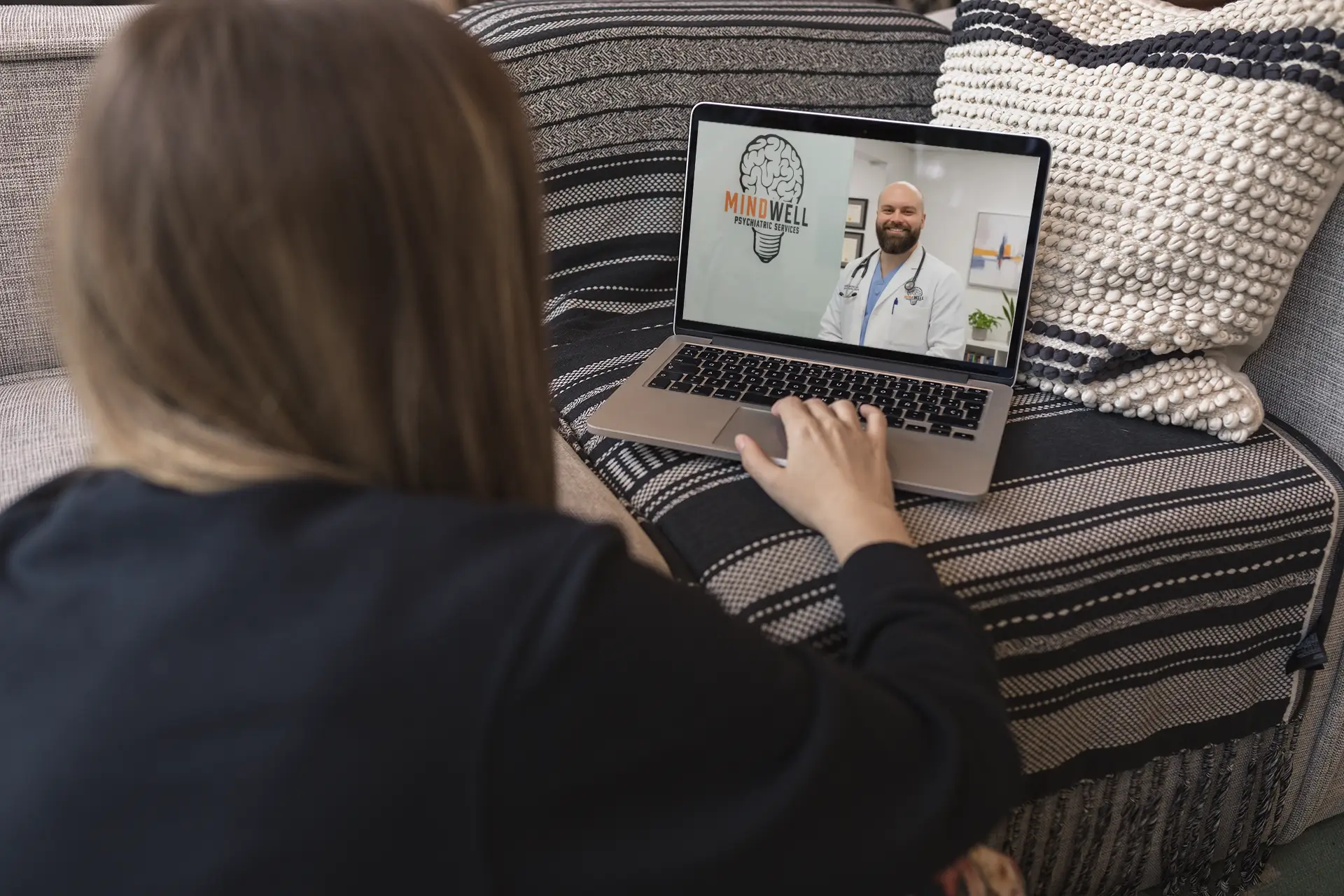
- Telehealth follow-ups so patients dealing with light sensitivity, fatigue, or transportation challenges can stay in care without driving across town.
We treat slowly and deliberately. TBI brains often respond differently to medications than non-injured brains, so we start low, titrate carefully, and adjust based on what you actually feel — not what a textbook predicts.
Why Patients Choose MindWell for TBI Care
MindWell is built specifically around the psychiatric symptom clusters that follow a brain injury — sleep disruption, mood instability, cognitive fog, irritability, anxiety, and the kind of low-grade depression that quietly settles in months after the initial event. These are the symptoms primary care often labels "stress" and neurology often hands back as "outside our scope." We treat them as the central problem they actually are.
Our medication approach is deliberate and patient. Injured brains are more sensitive to side effects than non-injured brains, so we use a low-and-slow titration strategy — start at conservative doses, adjust based on what you actually feel, and protect cognition along the way. We are not chasing fast wins. We are chasing the right plan for the brain in front of us.
We also use genetic testing as a tool to personalize medication choices. Pharmacogenetic data helps us narrow down which classes of medication your body metabolizes well, which ones are likely to cause side effects, and which dose ranges fit your physiology — cutting down the trial-and-error cycle that frustrates so many TBI patients who have already been through several failed prescriptions.
TBI care rarely lives in one specialty's lane. We coordinate with neurology, physical and cognitive rehab, primary care, and pain management when those teams are part of your recovery, so the medication plan, the rehab plan, and the medical workup actually move in the same direction instead of pulling against each other.
We also serve veterans with combat-related TBI; for that audience, our veteran mental health in Las Vegas page covers the full scope of conditions we treat, including PTSD, MST, and substance use that often runs alongside brain injury.
On the insurance side, we accept Tricare, CHAMPVA, and all major commercial plans — including Ambetter, Cigna, Optum, Medicaid, Medicare, and United Healthcare — so most patients, civilian or military, pay little to nothing out of pocket for evaluation and follow-up care.
Frequently Asked Questions
What is TBI?
TBI stands for traumatic brain injury. It refers to any disruption in normal brain function caused by an outside force — a blow, a jolt, a fall, a vehicle collision, a sports impact, or a blast wave. Severity ranges from mild concussion to severe injury, and symptoms can affect thinking, mood, sleep, and physical function for weeks, months, or years after the original event.
Can you treat TBI from blast exposure?
Yes. Blast TBI is one of the conditions we see most often, especially among post-9/11 veterans. Our provider has direct deployment and VA experience with blast injuries and treats blast TBI as a distinct clinical picture — not as ordinary concussion or pure PTSD. Most patients with blast TBI also need PTSD care, and we coordinate both in the same treatment plan.
Do I need to see a neurologist first?
No. You can come to us first. We will assess your symptoms, review your injury history, and determine whether neurology, imaging, or rehab needs to be added to your care team. Many patients only need psychiatric management. Others benefit from a coordinated team. We help you figure out which path fits your situation.
Does MindWell treat civilian TBI from accidents and sports?
Yes. While our practice has a strong veteran focus, we treat civilians with TBI from car accidents, falls, workplace injuries, sports concussions, assaults, and other non-combat causes. The clinical approach is the same — careful evaluation, sleep-first stabilization, and targeted medication management for the symptoms causing the most disruption.
Will medication help my TBI symptoms?
Often, yes — but not in the way most patients expect. There is no single “TBI pill.” Medication management for TBI targets specific symptoms: sleep, mood, anxiety, irritability, headaches, and concentration. We use a low-and-slow approach because injured brains are more sensitive to side effects. Genetic testing is available to help personalize medication choices and reduce trial and error.
Does insurance cover TBI treatment, including Tricare?
Most insurance plans cover psychiatric TBI care. We accept Tricare, CHAMPVA, Ambetter, Cigna, Optum, Medicaid, Medicare, and United Healthcare. For active-duty service members, veterans, and military families, Tricare and CHAMPVA generally cover evaluation, follow-up visits, and medication management. We verify benefits before your first appointment so there are no surprises.
Get the care that is right for you
If a brain injury — whether from a deployment, an accident, a fall, or a sports collision — is still shaping your daily life, we can help. MindWell Psychiatric Services offers compassionate, evidence-based TBI treatment in Las Vegas built around your actual symptoms, your actual goals, and your actual life. Recovery looks different for every patient, and you do not have to navigate it alone.