- (702) 530-2549
- admin@mindwellpsychiatricservices.com
- Tue - Sat: 10:00 AM - 06:00 PM

Veteran Sleep Disorder Treatment in Las Vegas
Quiet the Watch and Find Real Sleep Again

Schedule an Appointment
Specialized Care for Combat Insomnia, Nightmares, and Deployment-Related Sleep Issues
Short answer: If you're a veteran in the Las Vegas area struggling with combat insomnia, recurring deployment nightmares, hyperarousal that won't shut off at night, or sleep apnea on top of PTSD — MindWell offers veteran sleep disorder treatment from a provider who served in Iraq and worked VA inpatient mental health. Schedule an appointment to start feeling rested again.
Why Veterans Have More Sleep Problems Than The General Population
Most veterans have sleep issues. You are not alone, and you are not weak. Civilian sleep medicine often misses the reasons your sleep broke in the first place — combat conditioning, deployment trauma, weight gain from operational stress, and years of training your brain to never fully shut down.
Research from the Department of Veterans Affairs consistently shows veterans report insomnia at roughly two to three times the rate of civilians. Combat-deployed veterans report it at higher rates still. Sleep apnea diagnoses among post-9/11 veterans have climbed dramatically over the last fifteen years, often appearing alongside PTSD, traumatic brain injury, and depression.
Veteran sleep disorder treatment works differently than civilian sleep care. A standard sleep doctor will hand you a CPAP, suggest melatonin, and tell you to practice better sleep hygiene. That guidance is not wrong — it's just incomplete for someone whose nervous system was trained to scan for threats during a 12-month deployment. Effective care addresses the military context first, then the symptom.
MindWell builds veteran mental health in Las Vegas around how military service actually changes the brain. Sleep is one of the first systems combat damages and one of the last to heal — but it does heal with the right approach.
Common Veteran Sleep Disorders We Treat
Veterans rarely show up with one clean sleep problem. Most carry two or three overlapping issues — the insomnia from PTSD, the apnea from deployment-era weight gain, the avoidance built up from years of bad nights. We treat the whole picture.
Combat Insomnia
Combat insomnia is not regular insomnia. Your brain learned that going fully unconscious meant dying. Years later, that wiring is still intact. You lie down exhausted and your nervous system flips on — scanning the room, listening for sounds, checking exits. Some veterans still keep a weapon within arm's reach of the bed. Others can't sleep with their back to a door.
This is hyperarousal, and it is treatable. The work is not "better sleep hygiene." It's a combination of medication that quiets the threat-response system at night, behavioral techniques that retrain the brain to associate the bed with sleep again, and direct treatment of the underlying combat conditioning.
Deployment Nightmares and PTSD-Related Sleep Disturbance
Recurring nightmares — often replaying specific events, sometimes for years — are a defining feature of post-traumatic sleep disturbance in combat veterans. The dreams can include the convoy, the IED, the casualty, the patrol, the moment a decision was made. They wake you sweating, with your heart pounding, and they make you afraid to go back to sleep.
Prazosin, originally a blood pressure medication, has strong evidence for reducing trauma-related nightmares in veterans. We prescribe it carefully, dose it for veteran physiology, and combine it with focused PTSD treatment in Las Vegas when nightmares signal underlying trauma that needs its own work.
Hyperarousal-Related Sleep Avoidance
If your nightmares are bad enough, you stop wanting to sleep. You stay up watching TV until 3 a.m. You drink. You scroll. You start the cycle again the next night. Sleep avoidance becomes its own disorder — a learned behavior on top of the original problem.
We treat sleep avoidance directly. The fix is not white-knuckling it back to bed. It's reducing the nightmares first so sleep stops feeling dangerous, then rebuilding a sustainable sleep window. This often happens in parallel with broader trauma work.
Sleep Apnea (Service-Connected)
Obstructive sleep apnea is dramatically more common in veterans than in age-matched civilians. The reasons stack: combat-era weight gain, facial or neck trauma, prolonged disrupted sleep, alcohol use, and chronic activation of the stress response. The VA recognizes sleep apnea as service-connectable for many veterans, often secondary to PTSD.
MindWell does not perform in-lab sleep studies, but Michael coordinates with sleep medicine when a study is needed and integrates apnea care with the psychiatric side. CPAP compliance is notoriously hard for veterans with PTSD — the mask itself can trigger claustrophobia and trauma responses. We help patients work through that rather than abandoning treatment.
Substance-Related Sleep Disruption
A lot of veterans medicate sleep with alcohol, cannabis, or leftover prescription sedatives. It works for a while. Then tolerance builds, REM sleep collapses, nightmares get worse, and morning anxiety climbs. The substance becomes the problem.
We do not lecture about it. We help you taper safely, replace the sleep function with something that actually works, and address the reasons you were self-medicating in the first place. For veterans with opioid use history, MindWell also offers Medication Assisted Treatment as part of the broader plan.
How Sleep Loss Worsens Other Veteran Mental Health Conditions
Sleep is not optional. It is where the brain processes trauma, regulates mood, and resets the stress system. When sleep breaks, everything else gets worse — and most PTSD treatments fail without sleep restoration first.
Here is what the research and our clinical experience show:
- PTSD treatment outcomes drop sharply when insomnia is untreated. Trauma processing requires functional REM sleep. Veterans who start PTSD therapy while sleeping four broken hours a night usually plateau or worsen.
- Depression deepens with chronic sleep loss. The relationship runs both ways, but sleep loss often comes first.
- Anxiety and hyperarousal amplify. A tired nervous system is a more reactive nervous system.
- Substance use risk climbs. Alcohol and cannabis use often start as sleep aids.
- Suicide risk increases independently with severe insomnia. The VA and DoD both flag this in their clinical guidance.
This is why we treat sleep early and aggressively. For veterans whose sleep is shattered by combat memories, we often integrate care with our combat PTSD treatment in Las Vegas program. For broader context on how the two systems interact, our blog on the sleep problems and mental health connection walks through the mechanism.
How MindWell Treats Veteran Sleep Disorders
Veteran sleep disorder treatment at MindWell is psychiatric medication management built around military context. Michael does the evaluation himself, designs the plan around your service history, and adjusts as you go. There is no rotating roster of providers and no canned protocol.
What the process looks like:
Initial evaluation (50–60 minutes).
We cover service history, deployment timeline, sleep history, current symptoms, prior medications, substance use, and medical issues like apnea risk or TBI.
Diagnostic clarification.
We separate insomnia from nightmare disorder from sleep apnea from substance-related disruption. Each one has a different treatment.
Medication plan, when appropriate.
Off-label prazosin for nightmares, sleep-supportive antidepressants like trazodone or mirtazapine when mood is involved, careful and time-limited use of any benzodiazepine class medication, and direct evaluation of any current sleep aids you're already on.
Behavioral and environmental coaching.
Practical, military-translated sleep restoration — not generic sleep hygiene checklists.
Coordination with sleep medicine.
If apnea is suspected, we refer for a study and help you navigate CPAP, including the PTSD challenges that come with mask use.
Follow-up every 2–4 weeks early on.
Sleep meds need real titration. We adjust until it works, not until the appointment ends.
We are located at “800 N Rainbow Blvd, Suite 208, Las Vegas, NV 89107”
Phone: (702) 530-2549
Open from 10:00 AM to 06:00 PM | Tuesday to Saturday
When to Seek Help for Veteran Sleep Disorders
You don't have to wait until you're in crisis. Reach out if any of the following describe you:
- You sleep less than six hours most nights and have for months.
- You wake up multiple times scanning the room or listening for threats.
- You have recurring deployment-related nightmares, with or without sweating, screaming, or kicking.
- You avoid going to bed because you don't want to dream.
- Your partner reports loud snoring, gasping, or stopped breathing — possible sleep apnea.
- You drink, smoke, or use medication to fall asleep most nights.
- You wake up exhausted no matter how long you stayed in bed.
- Daytime fatigue is affecting work, driving, relationships, or your patience.
Many veterans put this off for years. If you've been telling yourself it'll get better on its own and it hasn't, that's the signal. Persistent sleep loss is its own clinical problem, and it's often a flag for something larger — read our piece on being exhausted and can't sleep if that pattern sounds familiar.
A Veteran-Led Practice
MindWell is owned and run by Michael Kuron, MSN, APRN, PMHNP-BC. Michael served as a Navy Hospital Corpsman, deployed to Iraq, and later worked as a registered nurse and psychiatric provider on VA inpatient units before opening private practice.
You will not have to explain what a deployment cycle is. You will not have to translate your MOS. You will not be asked if you've considered yoga.
This matters more for sleep than almost any other complaint. Sleep disorders in veterans are wrapped in shame — most veterans were trained that needing sleep is weakness, that staying up was a virtue, that letting your guard down meant failing the team. Working with a provider who has stood the same watches changes the conversation.
Get the care that is right for you
You served. You came home. The next mission is getting your head and your sleep back. Combat PTSD treatment in Las Vegas at MindWell starts with a phone call and a real evaluation from a provider who has been on the same side of the wire.
Frequently Asked Questions
Why are sleep disorders so common in veterans?
Combat training conditions the nervous system to stay alert. Deployment then reinforces that wiring with real threats, sleep deprivation, and irregular schedules. Add operational weight gain, alcohol use, TBI, and PTSD, and you get a population with sleep apnea, insomnia, and nightmares at far higher rates than civilians. It’s a predictable consequence of service, not a personal failing.
Can you prescribe prazosin for nightmares?
Yes. Prazosin has the strongest evidence base for reducing trauma-related nightmares in veterans, and Michael prescribes it routinely. We dose it carefully, titrate over weeks, and monitor blood pressure since it was originally a blood pressure medication. Most veterans see meaningful nightmare reduction within four to eight weeks.
Is sleep apnea service-connected for VA disability?
Sleep apnea can be service-connected — directly, if symptoms began during service, or secondarily, if it’s caused or worsened by another service-connected condition like PTSD, TBI, or weight gain tied to service. MindWell does not file VA claims for you, but a documented sleep study and a current mental health diagnosis are usually critical pieces of the evidence package. We can support that documentation as part of treatment.
Do I need a sleep study before treatment?
Not for insomnia or nightmare-driven sleep problems — those we can start treating on day one. A sleep study is needed when we suspect obstructive sleep apnea, which usually shows up as loud snoring, witnessed pauses in breathing, or waking up gasping. We refer for the study and continue managing the psychiatric piece in parallel.
Will sleep medication help my PTSD?
Sleep restoration alone won’t cure PTSD, but PTSD treatment rarely succeeds without it. Trauma processing depends on functional REM sleep. Most veterans who get their sleep back report a noticeable drop in daytime hyperarousal, irritability, and intrusive memories within the first few months — even before formal trauma work begins.
Will I be put on benzodiazepines long-term?
Rarely. Benzodiazepines like Xanax, Ativan, and Klonopin can help short-term, but they suppress REM sleep, build tolerance fast, and carry real risks for veterans with PTSD or substance use history. We use them sparingly, time-limited, and with a clear taper plan. There are better long-term options for veteran sleep disorder treatment, and we use them.
Do you treat both insomnia and sleep apnea?
We directly treat insomnia, nightmare disorder, and the psychiatric drivers of sleep disruption. For sleep apnea, we coordinate with sleep medicine for the study and CPAP, then keep managing the psychiatric piece in parallel — including helping veterans tolerate CPAP when PTSD makes the mask feel claustrophobic.
Does Tricare cover sleep disorder treatment, and I can do telehealth?
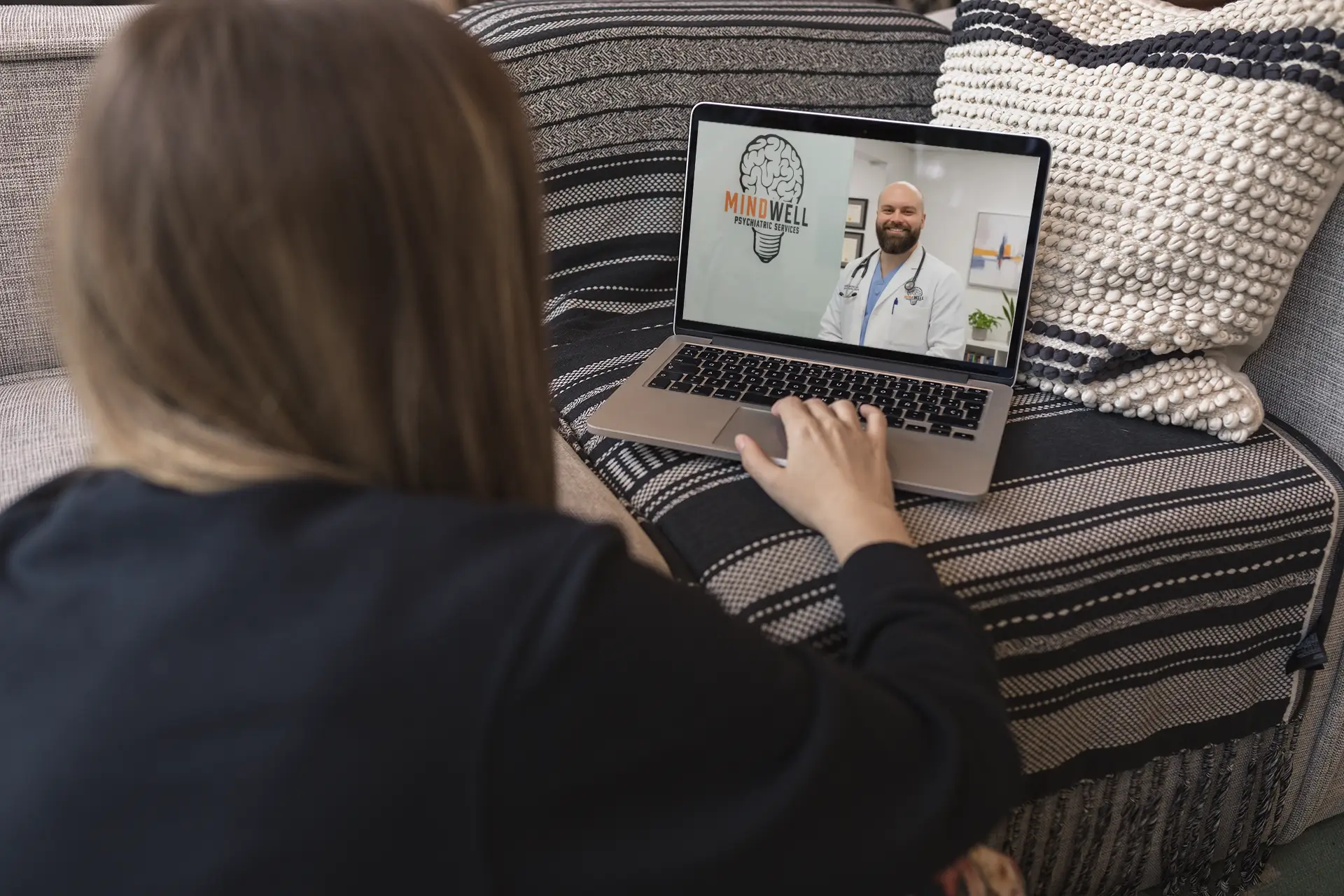
Yes. Tricare and CHAMPVA both cover psychiatric evaluation, medication management, and telehealth visits with MindWell. Most veteran sleep patients use telehealth for ongoing visits, especially follow-ups, which makes consistent care easier when you’ve had a rough night.
Getting Started with Sleep Disorder Treatment
Three steps and you're in:
- Reach out. Call (702) 530-2549 or request an appointment online.
- Verify insurance. We accept Tricare, CHAMPVA, Ambetter, Cigna, Optum, Medicaid, Medicare, and United Healthcare. Most veterans pay nothing or very little out of pocket.
- Schedule your evaluation. Telehealth or in-office at 800 N Rainbow Blvd, Suite 208, Las Vegas. Appointments often available within the same week.