
If you’ve tried two, three, or four psychiatric medications and still don’t feel right, you’re not unusual — and you’re not out of options. The reason many people cycle through medications without finding relief often has less to do with their diagnosis and more to do with how their body processes the drugs. Psychiatrists call this pharmacogenomic testing — and it can reveal exactly that. This article explains what it is, what the research says, who benefits most, and what getting tested in Las Vegas looks like.
The Short Answer
Pharmacogenomic testing analyzes specific genes that control how your body metabolizes psychiatric medications. A simple cheek swab can reveal whether you’re processing a drug too quickly, too slowly, or just right — information that helps your psychiatrist make smarter, faster medication decisions. It doesn’t eliminate all trial and error, but for many patients it meaningfully reduces it. MindWell offers this type of genetic testing in Las Vegas as part of a comprehensive psychiatric evaluation.
Why Psychiatric Medication Is So Hard to Get Right
Most people assume that finding the right antidepressant or ADHD medication is just a matter of trying a few options until something works. What they don’t realize is that the process can take months — sometimes years — and involves real suffering in the meantime.
Your provider bases this approach on population averages. They prescribe what works for most people with your diagnosis and waits to see if you respond. If the first medication doesn’t work, you try another. If that one causes side effects, you try a third.
This Isn't a Failure of the System
— it’s a reflection of how different people’s bodies actually are. Two people with identical diagnoses and symptoms can respond completely differently to the same medication. One reason for that difference is genetic.
Your genes control the enzymes that metabolize psychiatric medications in your body. Some people process certain drugs too quickly, meaning they never reach a therapeutic level. Others metabolize them too slowly, causing medications to build up and produce side effects at doses that would be fine for most people. These differences have nothing to do with your diagnosis, your willpower, or how severe your symptoms are. They’re biological.

What Pharmacogenomic Testing Actually Looks At
The most clinically validated genes in psychiatric medication are CYP2D6 and CYP2C19 — two enzymes in the cytochrome P450 system that metabolize a wide range of psychiatric drugs, including many commonly prescribed antidepressants, antipsychotics, and mood stabilizers.
CYP2D6 and CYP2C19 polymorphisms can influence the metabolism of SSRIs, affecting both drug efficacy and safety. Depending on your genetic variants, you may fall into one of several categories:
Poor metabolizer
Your body processes certain medications slowly, which can lead to higher drug levels, more side effects, and a greater risk of toxicity at standard doses.
Intermediate metabolizer
This means your metabolism is slower than average, which may require dose adjustments.
Normal metabolizer
Your metabolism falls within the expected range for most people.
Rapid or ultra-rapid metabolizer
Here, your body breaks down certain drugs so quickly that standard doses may never reach therapeutic levels, meaning you may not respond even though the medication would theoretically work for your condition.
Across 15,000 patients receiving clinical pharmacogenomic testing, 65% had potentially actionable CYP2D6 and CYP2C19 phenotypes — and 87% had some form of potential actionability from genetic findings. That’s not a small number. Most people who get tested receive information that is clinically relevant to their treatment.
What the Research Says
The evidence for pharmacogenomic testing in psychiatry is growing — and it’s encouraging, though not without nuance.
In 2023, a systematic review and meta-analysis of twelve randomized controlled trials found that pharmacogenomic tests including CYP2D6 and CYP2C19 were more effective than treatment as usual for improvement, response, and remission in depression — though the authors advised cautious use and noted that remission rates were less favorable in more recent studies.
A study examining treatment outcomes after CYP2D6 and CYP2C19 genetic information was provided to psychiatrists found that nearly every fourth physician reported improvement in patient outcome, and not a single physician indicated that their patient’s symptoms worsened after using a pharmacogenetic report to guide treatment.
Research published in PubMed found that pharmacogenomic testing has the potential to improve medication-related outcomes in some individuals prescribed psychiatric medications, and that through testing, clinicians can make biologically informed choices when selecting a new medication.
It's worth being honest about the limitations too.
The field is still evolving. Testing cannot predict with certainty which medication will work — it tells you how your body processes drugs, not how your brain will respond to them. Many factors influence medication response beyond metabolism, including your diagnosis, co-occurring conditions, other medications you take, age, and overall health. Genetic testing is one tool — a genuinely useful one — not a complete solution.
Who Benefits Most From Genetic Testing
Not everyone needs pharmacogenomic testing before starting psychiatric medication. For some people, the first medication prescribed works well and the process is straightforward. For others, testing can make a meaningful difference.
You may benefit most if:
- You’ve tried two or more psychiatric medications without adequate response
- There has been significant or unusual side effects on standard doses
- Currently taking multiple medications and want to understand potential drug-gene interactions
- You want to reduce the guesswork before starting a new medication
- Symptoms are significantly affecting your daily life and you need answers faster
Testing is generally less necessary if:
- Already found a medication that works well for you
- Starting psychiatric medication and have no history of medication problems
- Your condition is mild and you haven’t yet tried any first-line options
A full psychiatric evaluation will help determine whether pharmacogenomic testing makes sense for your specific situation.
You Are Not Treatment-Resistant. You May Be Under-Informed.
This section is for the person who has spent years trying medications, telling themselves they’re just “one of the difficult cases,” wondering if anything will ever really work.
There is a meaningful difference between treatment-resistant depression or anxiety — where the condition genuinely doesn’t respond to standard approaches — and medication that hasn’t worked because of how your body processes it. Those are two very different problems with very different solutions.
If you’ve been told your medication should be working and you just need to give it more time, but the side effects are unbearable or the effects are simply absent — that pattern is worth investigating. Your biology matters. A cheek swab can tell you things about your medication response that years of trial and error cannot.
Genetic testing won’t fix everything. But for the right patient, it provides clarity that changes everything.

How Genetic Testing Works at MindWell
The process is simple. We do not require a blood draw, hospital visit, or any lengthy procedure.
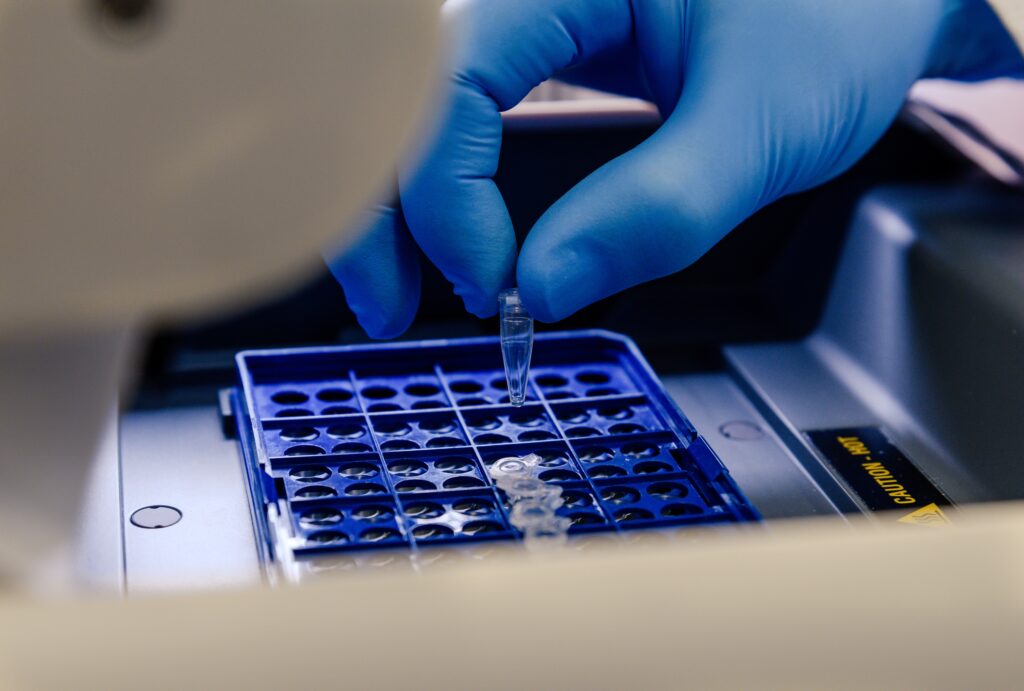
During your appointment, a cheek swab is collected — it takes less than a minute. MindWell sends the sample to a certified laboratory. At a follow-up appointment, Michael Kuron, MSN, APRN, PMHNP-BC reviews the results alongside your full clinical picture — your symptoms, medication history, co-occurring conditions, and treatment goals.
The genetic report identifies your metabolizer status for clinically relevant enzymes. Your provider uses that information to inform medication selection.
Genetic testing at MindWell is part of a broader treatment approach — not a standalone service. It works alongside a comprehensive psychiatric evaluation, medication management, and where appropriate, referrals to therapy. The goal is smarter, more personalized care — not a faster shortcut that skips clinical judgment.
Genetic Testing and Other Conditions
Pharmacogenomic testing is relevant across a range of psychiatric conditions — not just depression.
If you’re being treated for anxiety and SSRIs haven’t worked well, your metabolizer status for CYP2C19 may explain why. Also, if ADHD medication has produced unexpected side effects or hasn’t been effective, your CYP2D6 profile is relevant. Finally, if you’re managing PTSD and finding that medication responses have been unpredictable, genetic information can add useful context.
It’s also worth noting that depression and anxiety frequently co-occur — and both conditions rely on many of the same medication classes. Testing once provides information that applies across all of them.
When Should You Ask About Genetic Testing?
Consider bringing it up at your next psychiatric appointment if:
- You’ve had two or more medication trials that haven’t worked or caused significant side effects
- You have been told a medication “should” be working but you’re not responding as expected
- Starting fresh with a new provider and want to bring all available information to your treatment
- Managing multiple conditions and want to understand how your body handles the full medication picture
You don’t need to have failed at everything to benefit from testing. Some patients choose to get tested before starting their first medication — particularly when they’ve seen family members struggle with the same medications and suspect there may be a genetic pattern.
Getting Started With Psychiatric Genetic Testing in Las Vegas
Psychiatric genetic testing in Las Vegas at MindWell starts with a 60-minute psychiatric evaluation. MindWell offers testing for patients where it makes clinical sense.
Most major insurance plans are accepted, including Nevada Medicaid, Medicare, Aetna, Cigna/Evernorth, United Healthcare, Tricare, ChampVA, and Anthem Blue Cross Blue Shield. Insurance coverage for genetic testing varies by plan — the MindWell team can help verify your coverage before testing is ordered. Self-pay options are available. See the full list of accepted insurance plans.
Schedule an appointment or call (702) 530-2549.
Frequently Asked Questions
No. Genetic testing tells you how your body metabolizes certain medications — it doesn’t predict exactly which drug will work for your condition. Many other factors influence medication response. Testing reduces guesswork by adding biological information to clinical decision-making. It is one important tool, not a complete solution.
Results typically return within one to two weeks of the cheek swab being collected. A follow-up appointment is scheduled to review results and discuss how they inform your treatment plan.
Coverage varies by plan. Some insurance plans cover pharmacogenomic testing when medical necessity is documented. The MindWell team verifies coverage before testing is ordered so you know what to expect.
Yes. Genetic testing reflects your biology — not your current medication status. The results are relevant regardless of whether you’re currently taking medication, switching medications, or starting from scratch.
The most clinically validated genes for psychiatric medications are CYP2D6 and CYP2C19, which metabolize many commonly prescribed antidepressants, antipsychotics, and mood stabilizers. These are the genes with the strongest evidence base and established clinical guidelines from the Clinical Pharmacogenetics Implementation Consortium (CPIC).
No. Direct-to-consumer genetic tests are not designed for clinical psychiatric use and should not be used to guide medication decisions. Pharmacogenomic testing ordered through a psychiatric provider uses validated clinical-grade analysis and is interpreted within the context of your full clinical picture — not as a standalone result.
MindWell Psychiatric Services is a veteran-owned psychiatric practice located at 800 N Rainbow Blvd, Suite 208, Las Vegas, NV 89107. Michael Kuron, MSN, APRN, PMHNP-BC is a board-certified psychiatric mental health nurse practitioner currently accepting new patients. Call (702) 530-2549 or schedule online.
This blog is for informational purposes only and does not constitute medical advice. Always consult a qualified healthcare provider before making any changes to your treatment plan.